


YouTube announced they’re updating their monetization requirements…meaning you have three months to monetize on YouTube before everything doubles.
There’s no better time than now to monetize on YouTube. Literally, because early next year YouTube will be doubling its monetization requirements. I’m so sorry if I’m the one breaking that news for you… It’s not all bad news. While the new requirements go into effect on February 1st, 2027, they won’t affect creators who already meet the current requirements.
Which means you have the next three months to monetize on YouTube before everything changes. So let’s talk about it, because if you’ve been trying to monetize on YouTube, it can feel like they’ve just made that a whole lot harder.
This is why I’m here to help, so in this post you’re going to learn:
- What’s changed with YouTube’s monetization
- What this means for YOU as a Creator
- And I’ll share 7 tips to help you get ahead and try to monetize on YouTube before that happens (or at least help you start to snowball your growth to meet these new requirements when they take effect).
As always, if you’d prefer to watch instead of read, click the video below. Let’s jump right in..
DISCLAIMER: Links included in this post might be affiliate links. If you purchase a product or service with the links that I provide, I may receive a small commission. There is no additional charge to you! Thank you for supporting me so I can continue to provide you with free content each week on my blog and on my YouTube channel!
You Have 3 Months To Monetize on YouTube… Here’s What You’re Gonna Do
What’s Changed with YouTube’s New Monetization Requirements
First things first, what’s actually changed with YouTube’s new monetization requirements? There are a couple of ways you can get paid on YouTube, and only some of them are changing. For this guide, we’re focusing on what’s changing.
The two ways that YouTube monetization is changing are:
- Ads (the in-video ads that you get paid for, including in your videos)
- YouTube Premium Revenue (the portion of money that you get paid from YouTube Premium subscribers who watch your videos)
What does this mean for YOU?
What do these monetization changes mean for you? If you’re a new creator who isn’t yet monetized on YouTube, the new requirement is 8,000 qualified watch hours in the past 365 days (YouTube uses a rolling 365-day period).
The subscriber number isn’t changing; that’s still 1,000 subscribers.
The Shorts threshold has also doubled, and YouTube uses a rolling 90-day period for this. So starting in February, instead of 10 million Shorts views, you’ll need to get 20 million.
However, this doesn’t affect the YouTube Partner Program (YPP), which requires 500 subscribers and 3,000 qualified watch hours on long-form, plus 3 million Shorts views. YPP allows fan funding and certain shopping opportunities.
The good news is that if you’re already earning long-form ad revenue, the new 8,000 watch-hour goal won’t be your annual target. Your target will stay at 4,000 hours.
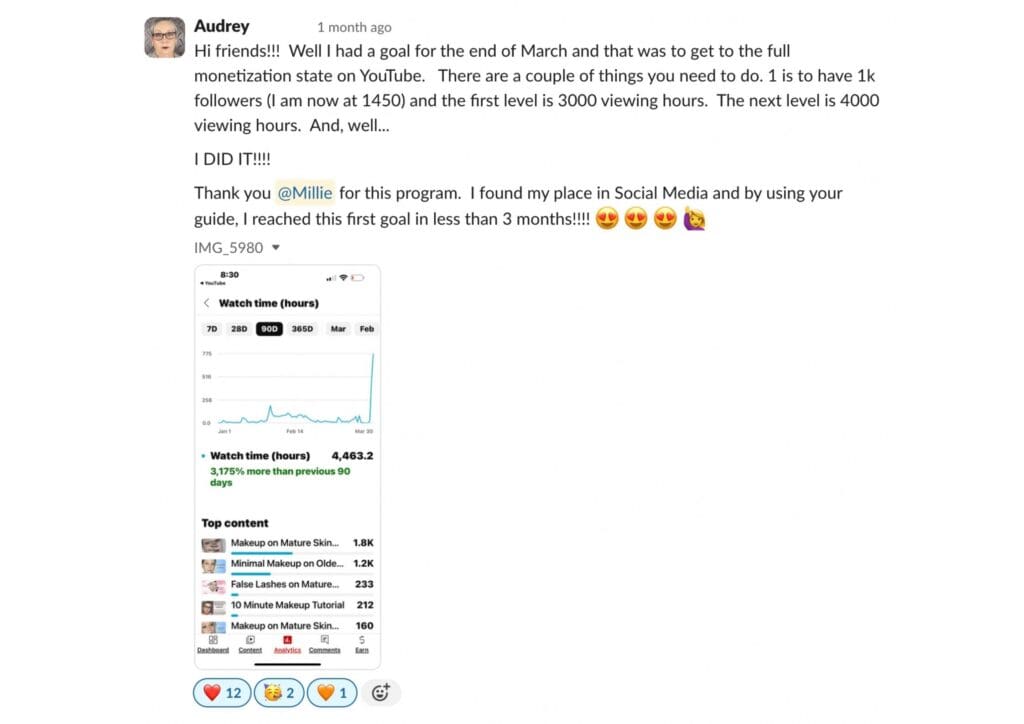
If this feels really far away and impossible, you’re not alone! YouTube is generally seen as the ‘long-game’ or the slow grower…BUT fast growth is possible. Take my BSP Student Audrey as an example and MAJOR inspiration. She reached her goal of monetizing on YouTube in just 3 months, so believe me, I know it’s a lot of work, but it is possible.
And very important, before we move into the tips to help you grow, there is a contract deadline. If you’re already monetized or in the YPP, make sure you accept the new changes ASAP.
You can review and sign the new terms in YouTube Studio.
Now, let’s lock in and do everything we can to help you meet YouTube’s monetization requirements. There’s nothing like a deadline to light a fire under our channels.
7 Ways to Increase Your Watch Hours/Subscribers/Views before February 1st
1. Choose Strong Topics
We’re starting strong by choosing strong video topics. There’s nothing wrong with choosing topics and creating videos that come naturally to you.
But if you want fast growth on YouTube, you need to choose video topics that are almost guaranteed to get views. And how can you guarantee that a video is going to get views?
Here are four different approaches:
#1: Pick video topics that people are already searching for
Use existing search engines to confirm people are looking for the video topics you want to make. One of the easiest ways to do this is to search for the video you want to make on YouTube and see what comes up. Some of my favorite tools for this are YouTube Search, Google Search Console, TubeBuddy, and Keywords Everywhere.
#2: Identify outliers in your niche
Once you have a topic in mind, go to YouTube and search for it. Look for videos that have outperformed or gone “viral,” and make sure you’re looking for videos that have outperformed in the last six months to a year. You don’t want to create a video that did well 2+ years ago. It might not perform the same for you.
You also want to make sure that the views-to-subscribers ratio makes sense. If a video has a million views, but the creator has 10 million subscribers, that’s why they got those views. Instead, look for videos with views equal to or more than the channel’s subscriber count.
#3: Identify a gap in the market
Identifying a gap in the market is exactly how I blew up my YouTube Channel, and I think it’ll be a little easier for Creators who are already avid YouTube users. As you’re searching on YouTube, pay attention to the questions that aren’t getting answered. What videos on a topic haven’t been made, but that you’re maybe seeing comments and questions for on other people’s videos?
For me, this was a video on how to edit an aesthetic Instagram feed. Plenty of videos showed creators how to edit their feeds to look like theirs, but I wanted to know how to take the ideas in my head and edit my photos to match my own creativity and aesthetic. That video didn’t exist, so I did the research, I learned how to create what I wanted, and then I taught it.
So if you’re searching YouTube and not finding the answer you’re looking for, that might be your gap in the market.
#4: Create a masterclass
I created a masterclass for the first time this year, and it’s been the best-performing video on my channel this year. It’s brought in over 20k subscribers and 1.2 million watch hours. So…if you think about it, you only need one masterclass to pop off, and you’ll be monetized in no time.
If you need inspiration for creating your own masterclass, Caleb Ralston was the first creator I saw do this style of content, so check out his channel, and don’t forget to watch my 3-hour masterclass teaching you how to become a content creator.
Alright, let’s move on to the second tip to help you get monetized in just three months: studying viewer retention.
2. Study Viewer Retention
Once you get someone to click on your video, you want to keep them watching. This is your viewer retention, and if you master it, you’ll hit your ‘Watch Hours’ in no time.
There are plenty of ways to keep people engaged, like starting your video with a question, opening with a curiosity gap, or opening with the most dramatic point in your video. Honestly, one of my favorite ways to keep viewers engaged is by adding visual variety, aka b-roll.
I love b-roll because it’s so easy; anyone can do it. It’s not a big strategy that requires planning and research, and with Storyblocks, you don’t even have to record all of your b-roll yourself.
Sometimes I do record my own b-roll, but when I get to edit, I often realize I either missed something or didn’t record enough, which is why I have been using Storyblocks for my entire YouTube journey.
Storyblocks has a library of 100% human-made stock media, meaning every asset is created by a professional filmmaker, artist, or musician–and NOT generated by AI.
Their library includes millions of clips, music tracks, sound effects, images, and templates, so I can always find what I need without jumping between platforms.
For example, let’s say I’m talking about building your creator business and I want something more interesting on screen than just me talking.
I could search for something like “creator working at a desk/filming content/editing on a laptop”, browse a few results, and find something that matches the style of my video.
If I don’t see something that matches exactly what I’m looking for, I can use their AI toolkit to customize a video to fit my unique style. Like, say I find the perfect clip but the lighting or time of day doesn’t match the rest of my footage.
I can prompt it to change the time of day, and now the footage fits what I was looking for.
I’ll do the same thing if I want to add music or sound effects.
I can find a few tracks that match the video’s energy, save them in my music folder, and have everything ready when I need it in the edit.
And the cherry on top: everything in Storyblocks is pre-licensed, so you have one less thing to overthink before uploading a video and worrying about copyright rules.
To get access to the human-made stock media library that’s built for creators and essential to my YouTube workflow, head to storyblocks.com/modernmillie. They’re offering 15% off any annual plan for a limited time, and that discount is only available through my link.
Huge thanks to Storyblocks for sponsoring this post.
So now that we know how to keep people watching, we need to make sure they click the video in the first place.
3. Master Video Packaging
Video packaging is basically the title and thumbnail of your video, working together to get people to stop their scroll and click. I actually do an entire deep dive into this topic, which you can read here. It’s something I’ve talked about a LOT, because it’s such an important part of your YouTube strategy.
Here’s the thing: before I even press record, my team and I start conceptualizing and planning the video’s packaging. We want to make sure people will actually click before we spend time and energy scripting, filming, and editing.
Your thumbnail is the visual piece that needs to stop someone’s scroll on YouTube. The title is the supporting element that tells someone what they’re going to get when they click on your video. Your title and thumbnail should NOT say the same thing. They need to complement each other.
And if you can pique someone’s curiosity with your title and thumbnail, and then deliver on that curiosity promise in the first few seconds of your video…well, you’ll be well on your way to mastering video packaging.
4. Create Bingeable Content
Generally, people won’t subscribe to your channel to help you hit your goals. People subscribe because you give them a reason to come back, connect with you, and keep supporting you.
A great way to do this is to create bingeable content that keeps people coming back. When someone is watching your video, they’re more likely to subscribe if you tell them what’s in it for them. If you tell them that every single week you create this style of content, and they can land on your channel and see that in action, they’re going to be more likely to subscribe.
You also want to think about your channel as a whole. If someone watches ONE video and they click on your channel and see no more topics on that video…they’re probably not going to subscribe. But if they land on your channel and see several videos on that topic, they’re more likely to subscribe, and they’re more likely to start watching another video.
So how can you do this?
How can you make bingeable content?
#1: Utilize ‘End Screens’
I’m going to tell you right now…most people do not watch until the end of your video. But the people that do, those are the people that are the most interested in what you’re creating and sharing. So make sure you are capitalizing on that. Tell them what to watch next in the ‘End Screen.’
#2: Utilize Playlists
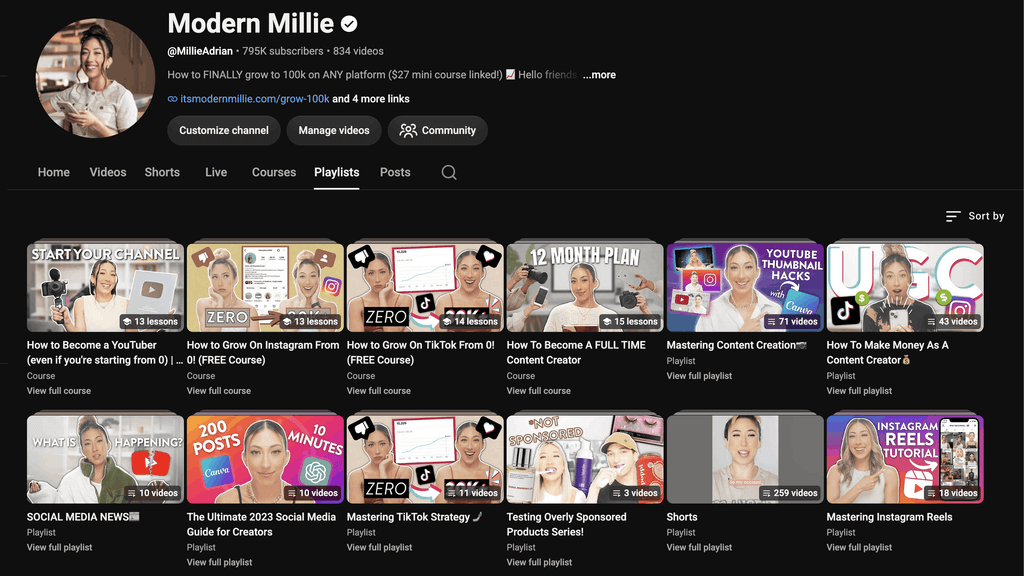
Again, this is a way to funnel people into more of your content. If someone came to your channel to watch a video on how to increase watch hours on YouTube and they see that you have an entire playlist with over 30 videos teaching someone (for free) how to grow on YouTube, they’re not only going to subscribe, but they’re way more likely to start binging those videos.
You can even combine these two strategies by adding playlists to your ‘End Screen.’
#3: Tease upcoming content
Basically, just always let your audience know what’s coming next. You can do this by creating a signature series and letting people know this is part one of five or part two of six. You can then reference the other videos as you move through the series and remind people that there is more to come.
You want to think about how you can create a Netflix-style library for your specific niche on YouTube. Speaking of niches…the next tip I have for hitting monetization in the next three months is going to be something that you might not love…
#4: Niche Down
I know, it’s one of my least favorite things to say…, but if you want to hit monetization FAST, this is a proven way to grow. Honest to God, the fastest way to grow on the internet is to get hyperspecific on your niche.
It not only helps you connect with a loyal fanbase, but it also helps platforms understand who you are, what you create, and who might like your videos.
Niching down clarifies your channel, your audience, and the content you create, and that clarity can be a powerful tool for getting more subscribers on YouTube.
This is what I want you to think about when it comes to ‘niching’ down on YouTube:
“Make sure your target audience has full clarity of who you are and what your channel represents.”
Niching down helps you get that clarity a lot quicker.
Is your channel clear?
If you want to know if your channel is clear, ask yourself a couple of questions:
- Are you moving in a direction that makes people want to subscribe?
- Can someone know EXACTLY who you’re creating for when they land on your channel?
If your channel feels like it’s missing that clarity or strategy, I have a resource that can help. I want to introduce you to Ready Set Clicks. They are a YouTube Strategy agency my brother created, and if you know the lore, we started a YouTube channel together 16 years ago, and he’s been working behind the scenes on my channel ever since.
Ready Set Clicks has helped my channel so much; look at where we are today (over 750k subscribers), and their goal is to help other YouTubers get that clarity and grow.
Ready Set Clicks offers:
- Channel audits
- Assistance with video packaging
- Full-blown channel support (with editing, scheduling, and posting on your behalf)
If you’ve been feeling overwhelmed by YouTube but know you want to hit the ground running with a dedicated support team behind you, check out Ready Set Clicks to see how they can support you on your journey.
6. Lean into Holidays/Seasons
This is an underrated tip, and I absolutely love doing it. It might even be my favorite piece of advice in this entire post.
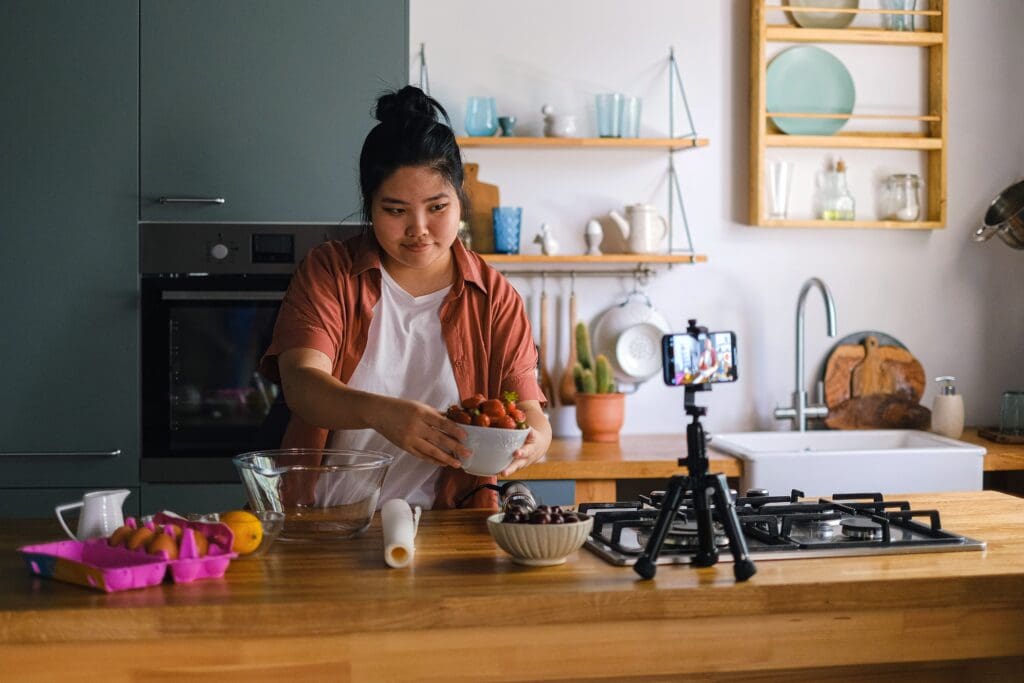
This is going to look different for every niche, but it is possible. Now, I want you to be looking 2-3 months ahead. In August, you’re already thinking about October and Halloween. Is there anything about that season and holiday that can relate to your niche and content?
Let’s use my favorite coffee example. In August, you already need to be thinking about your pumpkin spice latte, your witch brew matcha. Get ahead of the trend on these seasonal recipes and start sharing them with your audience EARLY. You want to be the first, the trend SETTER.
Then repeat for November with Thanksgiving, December with Christmas and the New Year’s and winter–how can you capitalize on those moments and start those trends with your content?
While this is harder for an education niche, it’s not impossible. For me, this post shows how I’ve leaned into a trend. I can also create content to help creators start the New Year. I might not be able to hop on the Halloween bandwagon, but I can create content around people who want to lock in for the last quarter of the year.
My student Stephanie is my favorite example. She came to me in August saying she was ready to quit. We made a plan for her to give everything one more BIG push, and I’m not kidding…her account BLEW UP.
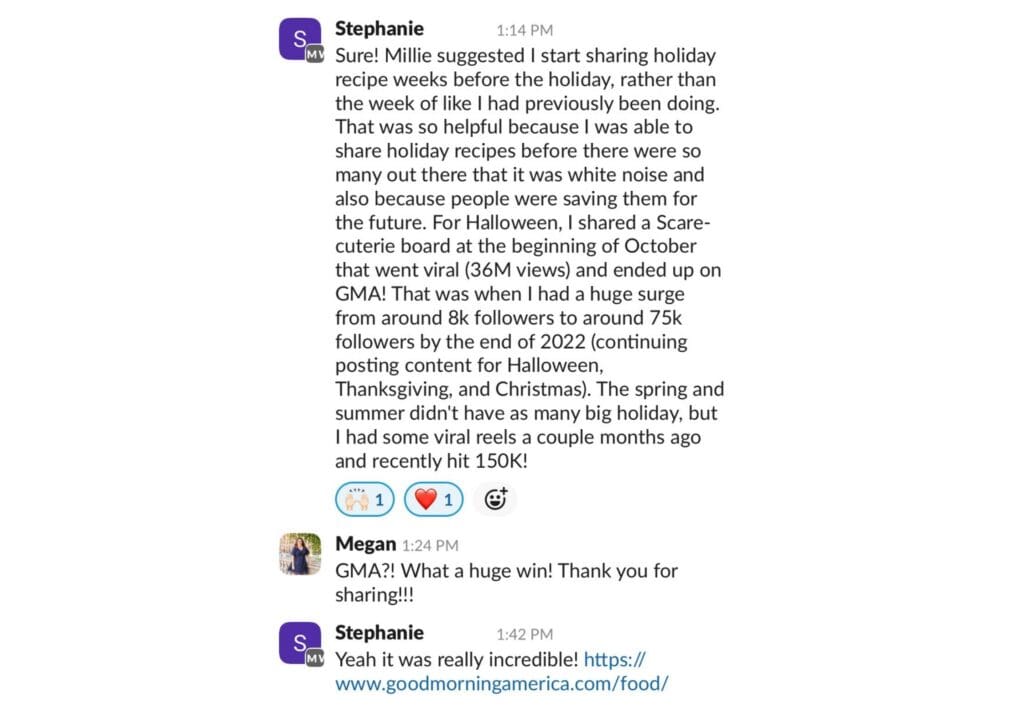
Our strategy focused on sharing holiday-themed recipes weeks before everyone else, before all the noise. And…it worked. One of her videos got 36 MILLION views and was shared on Good Morning America. Needless to say, she didn’t quit. She is thriving to this day.
Seriously, tap into the power of seasons and holidays, and start posting earlier than you think. This is an underrated way to grab more views and watch time, helping you hit monetization in three months.

7. 1% Better
YouTube can feel overwhelming, and these monetization changes can make it feel even further away. But a big reason that people never hit their monetization goals is that they quit too early.
Don’t let that stop you from succeeding. The biggest piece of advice that I always give to someone who wants to start a YouTube channel is to consume as much learning content as possible. There is so much information out there, so keep learning, and as you learn, slowly start applying it to your own channel.
Aim to make each video just 1% better than the video that came before it. Maybe your video topic is 1% better, maybe you improved your script, or your thumbnail. But choose just ONE. You don’t need to fix everything every time.
Perfectionism will stop you from ever getting there. So keep learning, improving, and getting 1% better with everything you do.
You have three months to monetize on YouTube. You GOT This.
Remember, YouTube growth isn’t linear. The right topic, at the right time, with the right packaging, can help you get there. Every YouTube channel started at 0, so no matter where you are right now, keep going.
Kick your perfectionism to the curb and use the next three months to monetize on YouTube. If you want some tips to help you reach those required Watch Hours, read this post next.
And I want to know: how close to monetization are you? Let me know in the comments below.
I’ll see you in the next one. Follow your joy, bye!





Be the first to comment